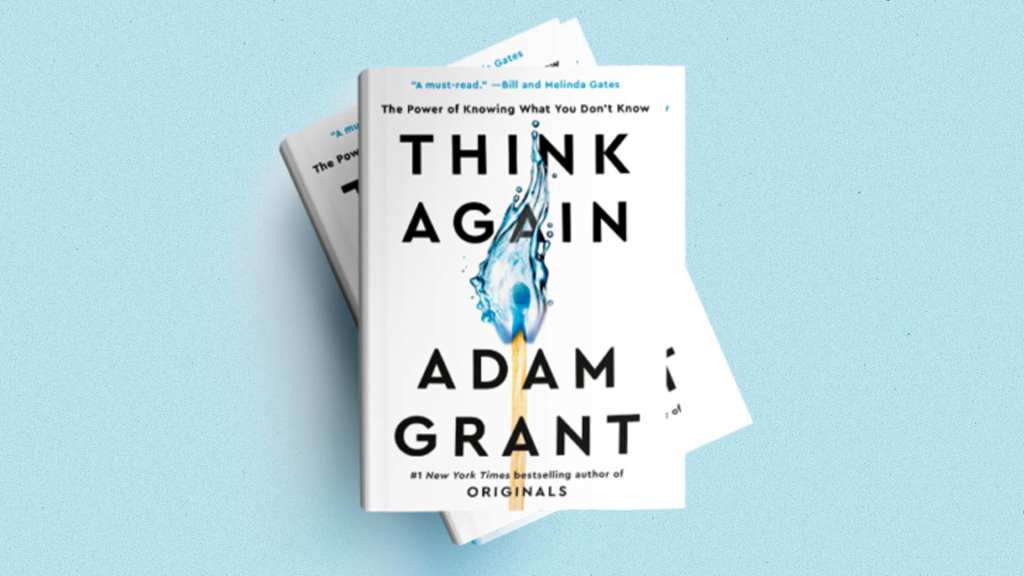
Book By Adam Grant
Nothing lights up a nation of nearly 1.4 billion people, as much as an India-Pakistan cricket match. The love for the game coupled with the historic animosity between the two countries serves as a perfect recipe to tune up patriotic spirits across borders. But have we as a nation ever paused to think why we hate a country we have never stepped foot on, or why we hold a grudge against people we have never even spoken to. A few years ago, I remember watching a Pakistani drama series that was screened on the Indian television network. It ended up being one of my favorites shows till date. It made me realize that these people aren’t very different from us! They look the same, they speak similar languages, and their culture parallels ours to a great extent minus the religion. Then why do we hate them as individuals?!
How is this story relevant to this book summary, you might ask? It is just an example of my personal experience of “thinking again”, questioning assumptions and unlearning ideologies- the mantra that Grant preaches. Throughout life we form numerous opinions, develop unshakable beliefs and it takes an active effort from our end to periodically filter them and only keep the ones that continue to hold true and serve us. Grant delves into the why and the how of revisiting our opinions, and among these numerous lessons, the three that standout the most for me are:
The Challenge Network
The importance of a support network cannot be underscored enough. We all need a shoulder to cry on, an ear to vent to, and someone to reach out for advice whenever lost. In addition to a support network, a challenge network is equally valuable. As Grant describes it, this is a network that is not afraid of conflict, doesn’t shy from disagreement and is not looking to please you. It is the network that forces you to think outside your comfort zone, cajoles you to question the “why”s behind your opinion and challenges you to revisit your approach. Grant cites Oliver and Wilbur Wright as each other’s challenge network, as they pushed each other’s boundary of knowledge and helped question any assumptions they made as they went about building the first ever aircraft.

The Dance of Disagreement
Debating has always been my achilles heel. As a kid, I remember looking up to my sister who was the vice president of the debating club at her college, and hoping one day to follow in her footsteps. But somehow I could never find my arguments convincing enough. Shades of gray would always pop up making it difficult for me to pick a side and win people over. The dream never materialized and it took me a while to realize that debates needn’t always be an argument with a conclusive victory. As Grant puts it, influencing people is a dance, with the participants alternatively stepping forward and backward.
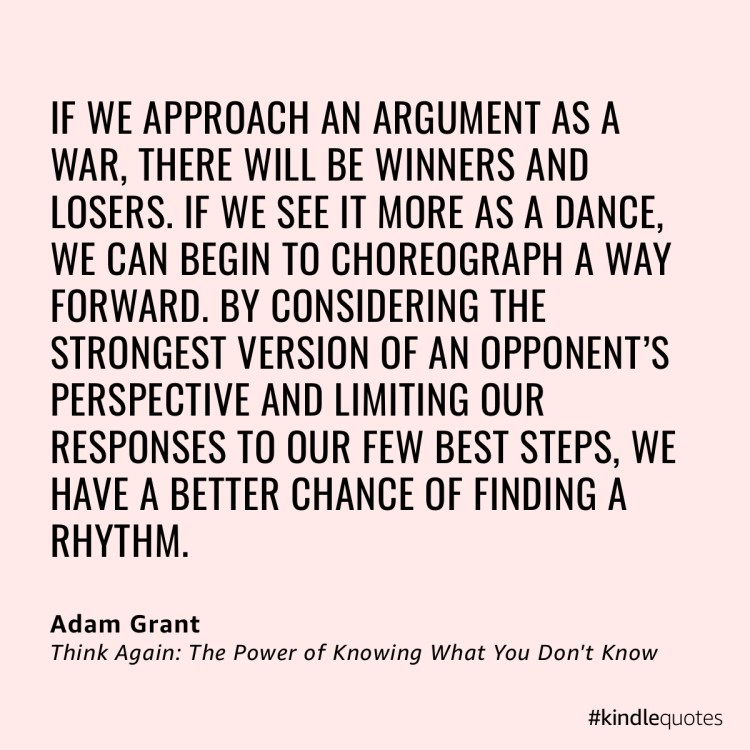
A study by Neil Rackham brought to light some of the interesting approaches adopted by expert negotiators that set them up for success. The study observed the experts focusing on finding common ground with their opponents, rather than putting forward contradicting arguments. The experts then went on to present fewer arguments- emphasizing on the quality of their arguments versus their sheer quantity. Most importantly the skilled negotiators did not adopt an attacking strategy toward their opponents, but rather expressed curiosity in understanding their thoughts. Instead of making decisive statements, they chose to have a conversation with their opponents punctuated by periodic questions. A good debate is characterized by both parties thinking like humble and curious scientists- open to new insights and opinions.
Rethinking Life
“What do I want to be when I grow up?” is a question that has always followed me along. Even to the extent that when I am all grown up (at least, I would like to assume) it still torments me- is this for life? if not, then what? Interestingly enough, Grant states that asking children this very same question is a terrible idea. It forces them to define their life on the lines of an aspirational career, and in turn creates a tunnel vision. They go on to overcommit in order to achieve this vision, without pausing to question if they still want to be the person they set out to be.
A few years ago I wanted to build a career in public administration. Reading about political history, volunteering with non-profits, and seeking to find a more scalable solution to socio-economic problems of the developing world- that was me five years ago. I did dip my toes into the field, working with a research organization, participating in on-ground surveys and plotting graphs to understand the decisions of the poor. And then realized it wasn’t for me. I craved structure. I hated bureaucracy. I valued autonomy. And in the process realized that I no longer felt the purpose I had envisioned I would experience, which led me back to the drawing board.
Similar to annual health checkups, Grant suggests conducting life checkups periodically. Ask yourself if you are in a place in life that you want to be- mentally and physically. If not, where would you like to be? Question if your decisions are your own, or if they are influenced by your peers or the society at large.

Relationships, like career, require rethinking as well. What am I looking for in a partner? Why am I looking for this particular trait? How important is this trait to me? Don’t stick to the preconceived notions you might have developed as a teenager or might have subconsciously picked along the way .
Our career, relationships and communities drive us, fulfill us and in a lot ways, complete us. Sticking to them, when they no longer serve us, is taking away a richer life from us. So pause often and reflect on the life you have created thus far, curate the vision that you have for the future and build the bridge that will lead you to it.
 Asra Yousuf
Leave a comment