
We spend a third of our adult life working. Work can take various shapes and forms for different people. It can be structured or unstructured. You could be working for your own business or for someone else’s. It could be a means to pay the bills or it could be something you are intensely passionate about.
We all have our own personal relationship with the work we do- a relationship that evolves, as we grow and the nature of our work changes. With the curiosity of how I can be more intentional about crafting a fulfilling work-life, I picked up Bill Burnett’s and Dave Evans’ book on “Designing Your Work Life”. And it did not disappoint. Here are some of the key things I learnt from the book:
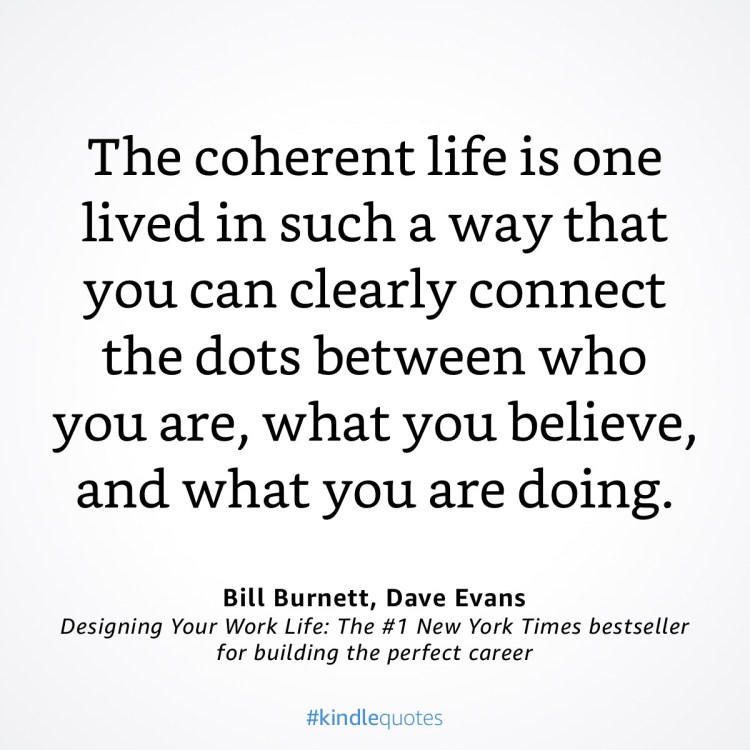
Adopt a Designer Mindset
“Designers don’t think their way forward. Designers build their way forward.”. To adopt a designer mindset, imbibe the following principles:
– Be Curious: Be interested in people and things, versus trying to be interesting.
– Try Stuff: Have a bias for action. Just do it.
– Reframe Problems: Define the right problem to solve
– Know its a Process: Balance between exploring ideas (flare) and focusing on some specific ideas.
– Ask for help: Get out there and talk to people doing work that interests you. Do the research.
– Tell your story: Share your story to open the door to opportunities.
Life is “Good enough for now”
Designing a fulfilling worklife is a process- a process that is bound to take multiple iterations and trials. Until you get there, recognize where you are now and accept that it is “good enough for now”. Be content with your current situation while you work towards getting to an ideal place. Oft a times, we are running on a “hedonic treadmill”- where we seek newer and better experiences and things. The search is endless. Most of life’s joys don’t come from striving for more things but enjoying what you have in the present. Get off the hedonic treadmill.
Control the decision, not the outcome

Have a Bias for action
“Start small, set the bar low, and try something.”. Don’t just research and explore ideas and potential solutions. Act. Define a minimal actionable problem (MAP) and come up with the Best Doable Solution (BDO). Don’t focus on the perfect solution, instead reduce the friction to implementation and focus on acting on a small, easy solution. Adopt a “satisficing” attitude- search for alternatives until a reasonable threshold is met and then act on it.
Map the impact you wish to have

We all want to create some impact through our work. But what does “impact” really mean to you? A surgeon removing appendix has impact, a policy maker drafting a cybersecurity policy also has impact. To chart your impact, refer to the graph above. On the extremes of the x-axis is creating something new (right) – eg. ChatGPT, and repairing what exists (left) eg. a surgeon’s work. The y-axis measures the scale of the impact- from global to personal. On this graph, identify the quadrant where the impact you wish to make, lies.
Strive for ARC
Strive for ARC- Autonomy, relatedness and competence.
“Autonomy, at its most basic, is the need to control our own life. It’s a human drive and an innate psychological need. We all want to be in a position at work where we are able to control aspects of what we do, who we do it with, and when we do it.”
“Relatedness is about connecting to your people and your community . We develop and sustain our relatedness by engaging with our fellow workers, collaborating well on projects, and being empathetic to the needs of those we work with and work for. The drive for connection is a strong human motivator and a basic component of our evolutionary history.”
“Competence is just what it sounds like. We all want to be good at what we do. Some of us even want to be the best at what we do. We develop our competency by (and there is an element of grit in this one) practicing our craft until we have achieved what others would call mastery, and then going on to “out-master” ourselves through even more concerted practice.”
Chart Your Maker Mixer

Money, impact and expression- are three different ways for people to measure what they make. To each this mix might look different- some might have a high proportion of money, while some might have a high proportion of expression. Identify what your mixer looks like now, and what would you want it to look like in the future.
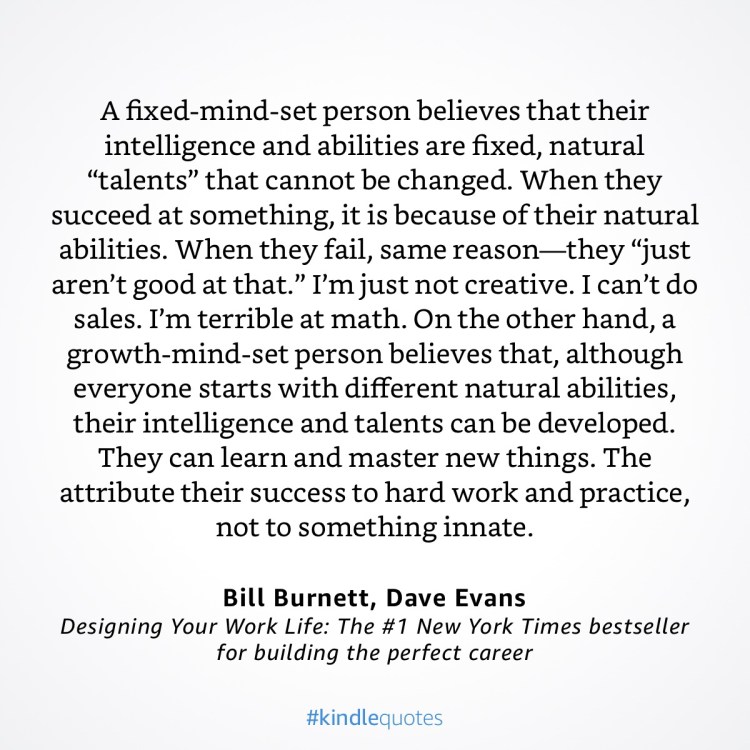
Build a growth mindset
Redesign, don’t resign
Don’t let quitting the job you are unhappy at, be your first solution. First, redesign the job you are in. This can take different forms:
1. Reframe and re-enlist: Step back and curate a new relationship with your work. Know your value and skills and find avenues where you can apply them to fulfill the organization’s needs.
2. Remodel: Focus on your strengths and leverage them to add elements to your job that align with your interests. It can take the form of mentoring individuals or designing workflows- whatever you enjoy and are good at.
3. Relocate: Pivot to a different role in your organization which interests you. Talk to people. Do side projects. Learn the ropes. And seize the opportunity.
4. Reinvent: Reassess your career choices and do a hard pivot into a completely new line of work. Go back to school or take evening classes. Invest in learning and preparing for a new career in the same company.
Network for your next job
Network to find jobs . Don’t just apply. Don’t leave the fate of your career to a resume scanning algorithm. Talk to people about their work and build connections. Tell your story. Reach out to your network when you find the opportunity with the right mix of interest and skills.
The pieces of advice in this book are golden. We go from school to college to job, all the while preparing for the workforce without being actually prepared. We build the knowledge to do our job without knowing if we are in the right job even. You should definitely give it a read if you want to think through your career choices and open up the possibility of redesigning your work life.
 Asra Yousuf
Leave a comment