
Book by Priya Parker.
We all gather in some form or the other- be it with friends, family, co-workers or even strangers. What gatherings look like for each one of us evolves with different stages of our lives- from birthday parties to weddings, from coffee shop meetups to more intimate dinner parties, from prom nights to conferences. But what distinguishes a “gathering” from just another casual hang out with friends? Gatherings are generally coming together of people with a shared purpose and specific intention- that intention could be as varied as geeking on a subject of interest at a conference or meeting new people at a board game night.
Some of the gatherings I have been a part of in the past, have left me energized and some have left me disappointed. I have hosted gatherings and often wondered how could I have done better. With a curiosity about what makes a gathering fulfill its purpose, I picked up Priya Parker’s book which talks about the elements of a meaningful gathering.
Gather with a purpose
Speaking of fulfilling purposes, the foremost question to ask yourself when planning a gathering is the WHY. What is the purpose behind this gathering? What should people take away from the gathering? Parker emphasizes on picking a central purpose and not overlapping a couple of nice-to-have purposes. To quote her, “Make it bold and sharp”.
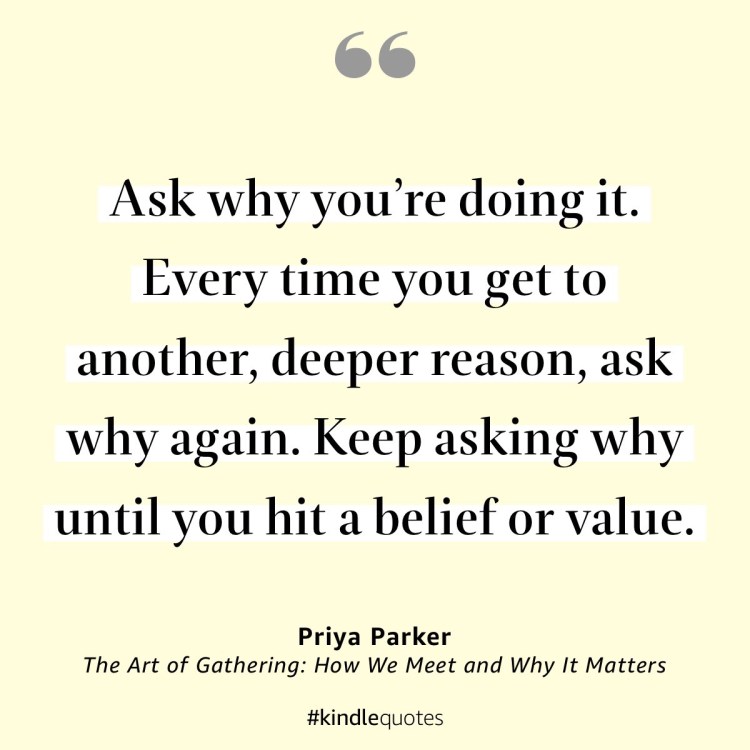
A clear purpose dictates what aspects of planning should you focus on. If the purpose is to celebrate a milestone like your parents’ anniversary, how can you make it less about the food and more about celebrating their love over the years.
Other things to consider when defining the purpose is to be specific and to ask yourself how your gathering is unique from other gathering. Being specific helps you choose the right people to invite while being unique helps your guests understand what they stand to benefit from the gathering.
Close doors
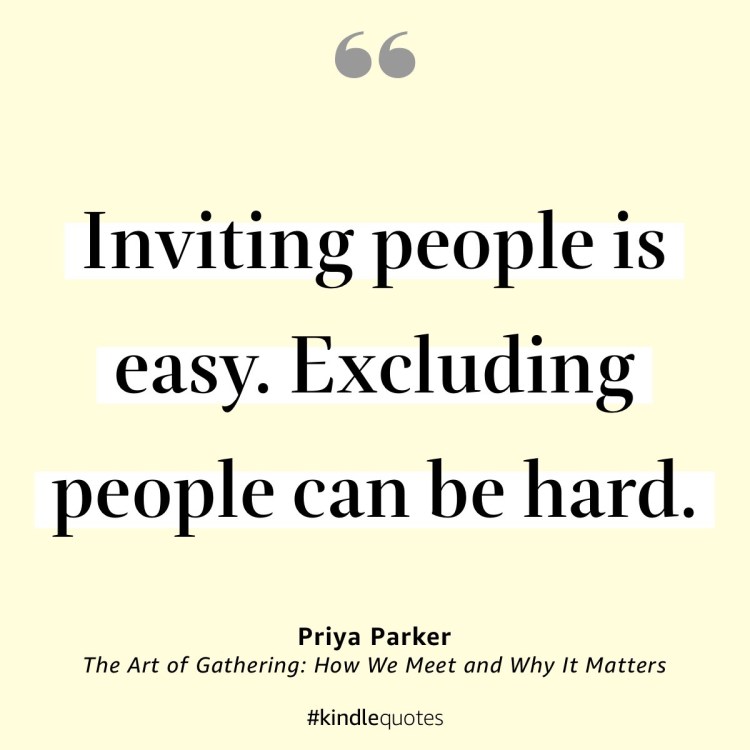
If only you could invite everyone you know to your next gathering, right? There wouldn’t be the risk of straining your relationships by excluding some. But however difficult it may be, we have to pick and choose who we wish to gather with because if ‘everyone is invited then no one is invited’.
So do not fall into the trap of calling that friend only because they had invited you to a dinner last month. Instead go back to your gathering’s purpose and choose the people who will help fulfill that purpose. If the purpose of a gathering is to make a decision, invite people who have the necessary knowledge and experience to contribute to the discussion.
Space Matters
The space you choose for your gathering is often determined the number of people you invite. But what if you approached it the other way? Parker suggests choosing a venue as per the gathering’s purpose and not based on logistics. I have been in gatherings where the space was too big for the number of guests which led to people being scattered across the venue. This led to everyone having conversations with the same set of people instead of moving around the space and meeting new people. The design of social space, physical space, and emotional space affects how people engage with ideas, content, and each other.
“To paraphrase and distort Winston Churchill, first you determine your venue, and then your venue determines which you gets to show up.”
Don’t be a chill host
As a host, it is your responsibility to protect, equalize and connect your guest. Protect your guests from getting bored, from the distractions in their pocket, and at times, even from other guests who might make them feel unheard. You’ve also got to make sure your guests are at an equal footing. For instance, if everyone at the gathering works in a specific industry except for one person, make sure that the discussion doesn’t gravitate towards their work life far too often. When you bring together strangers at a gathering, make sure you create an opportunity for introductions and connections.
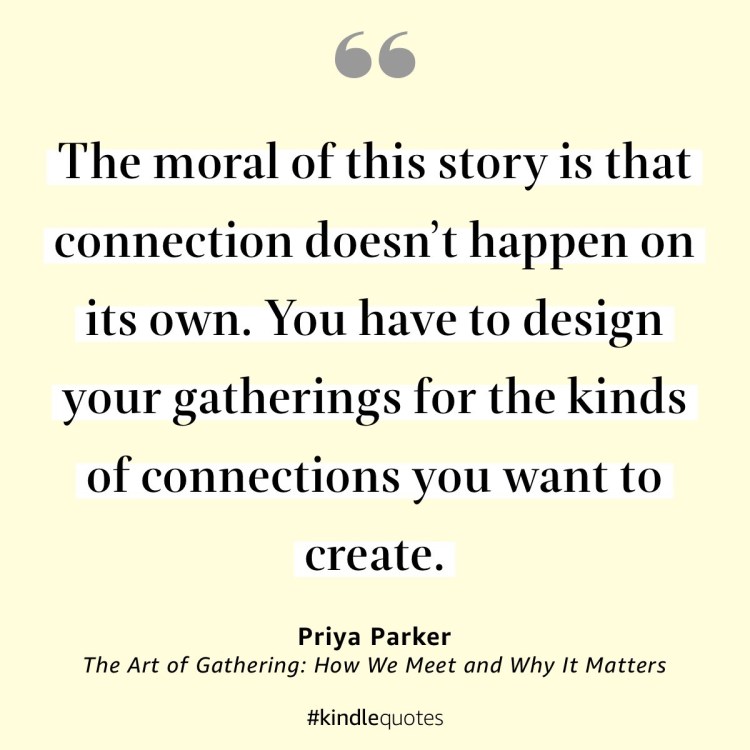
Keep the logistics for later
How you start a gathering sets the tone for the rest of the event. When you start a funeral by asking people to move their parked car from a spot, you instantly dissipate the strong emotions brewing in the room. You want to start your gathering with a strong note, not with logistics. Once again, go back to the purpose of your gathering and try to embody it in your opening. Remind people, in some shape or form, why they chose to take out the time and be here.
Encourage people to bring their authentic selves
How do you make people open up and let the their guard down? How do you make your gathering a safe space for them so that they show up as their true self and not their idealized self?
Sharing stories is a great way to foster deeper connections and help people open up to one another. Our stories give a peek into who we were when we made the decisions we made.
Parker also encourages to cause “good controversy”. Conflicts can be messy and its always nice to have everyone aligned. But in avoiding it, we waste countless opportunities to truly connect with others about the things we care about. A healthy amount of controversy and debate is a nice ingredient to add to your gathering. In situations like work meetings, it helps bring both side of the arguments and enables everyone to arrive at a decision versus beating about the bush.
Accept that there is an end
Everything with a beginning, must have an end. However, Parker notes that sadly too many of our gatherings don’t end. They simply stop.
End your gathering on a strong note, much like the beginning. Revisit the purpose and enable your guests to reflect on the gathering and evaluate what they wish to take away with them. Closing well helps frame your gathering and puts a bow on the box of memories made.
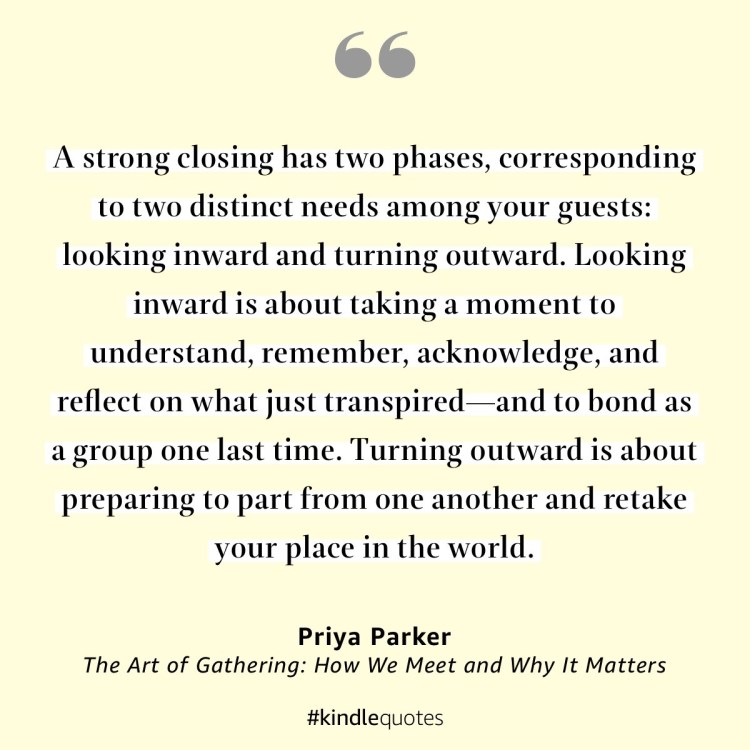
Your gathering starts the moment you start planning it- it starts with the ‘why’, then the ‘who’, goes to the ‘when’ and ‘how’ as you plan the event and ultimately ends with the ‘what’ as you encourage your guests to question what they wish to take away from the gathering. Before you go deep into the logistics, pause and ask yourself these questions and you will have crafted a joyous and fulfilling gathering.
 Asra Yousuf
Leave a comment