
Book by Morgan Housel.
I am often frustrated at the nearly negligible role that our primary education plays in teaching us fundamental life skills- How to build healthy relationships? How to manage your money wisely? How to be good parents? etc. etc. However, only the other day, I stopped to reflect on this and realized that the nondeterministic nature of these problems makes it difficult to define them in terms of a syllabus and have teachers dictate a set of guiding principles around it. Every human being is uniquely different in his/ her own way. Our perspectives and opinions are our own, and the decisions we make and the way we act are a product of our past experiences and future goals. And this is the premise that Morgan Housel leads with in his book- ‘The Psychology of Money’.
Money can be perceived as pure numbers- the value of which is easily quantifiable based on the current market status. Why then is spending $100 in a day a bigger deal for one person over another, despite having similar income? Why does each person assess the risk of investing the same amount of money differently? Why do some value the material things that money can buy while some value the abstract luxuries that money offers?
This book is not about teaching the right strategy for investing nor is it about how to time the market. Rather it is about understanding how money is so much more than a number and how can we go about deconstructing our relationship with it and building a strong foundation for our investing decisions. Some of the key themes that stand across the 20 lessons that Housel talks about are:
To Each His Own
Our relationship with money is determined by our past experiences with it and the financial times we have experienced. This might range from growing up in a household where money was scarce to having lived through the era of The Great Depression. Each experience shapes our risk appetite for the future. When you have lived with scarcity or through a recession, you tend to avoid high risk investments in the future. For instance, home ownership and real estate investments in my parents’ generation usually happened close to their retirement age when they had saved enough money to pay upfront, since they were not comfortable with the idea of mortgage.
Keep Calm And Invest

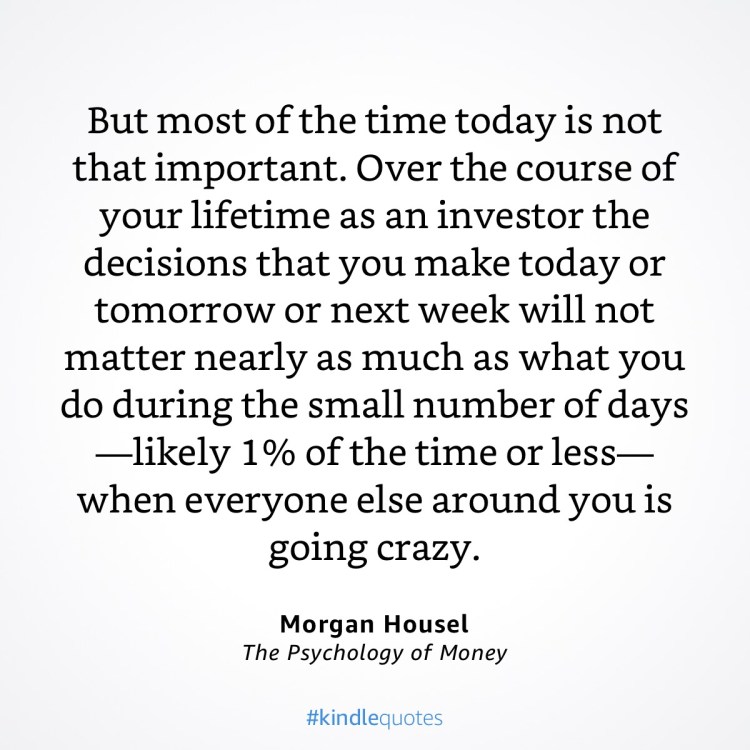
Starting early and being consistent is the fundamental investing advice. And this is the secret to bridging the gap between becoming wealthy and staying wealthy. Staying wealthy requires you to exercise humility and frugality, and demands you to continue investing despite market fluctuations. It happens when you are not swayed by short term profits or the numerous avenues that money can open up, and instead keep your head down and play the long game.
Buy Independence
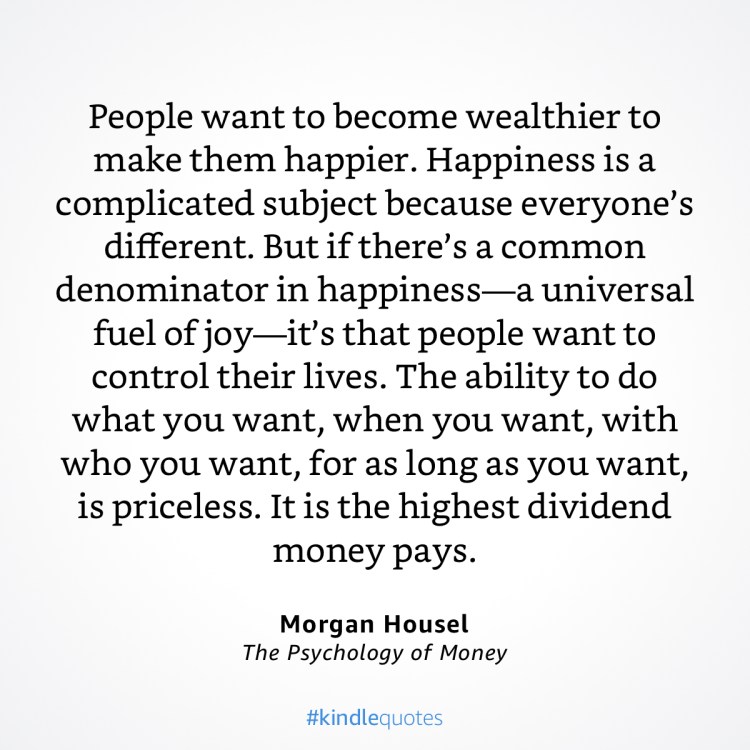
One of the greatest thing that money can buy is not a Porsche or a villa by the ocean, but independence. Money can give you the ability to wake up one fine day, and have the freedom to quit your job and live life on your own terms without worrying how you will pay the bills, or put food on the table. Flexibility and control over your time is an unseen return on wealth.
Recognize Mimetic Desires
In the influencer economy that we live in, it is easy to get swayed by the obvious display of wealth by others. But status symbols do little to garner the respect and admiration you seek through them. Yes, it makes a statement that you once had the huge money needed to purchase them but all it does for the onlooker is foster a mimetic desire to want it as well. Separating need from desire demands conscious effort and self-awareness. If the purchase warrants a need or brings you joy, then one must definitely make it. But never for making an impression on others.

Change is the Only Constant
If you ever made a five-year plan, look back on it and ask yourself how much have you deviated from it up till the present moment. Our plans are constantly evolving as new variables are introduced in life- a new family, an emergency, career transitions. Accepting that change is inevitable is extremely important. This means always leaving some room for error and having enough savings such that you do not have to interrupt the process of compounding, come what may.

Personal finance is personal for a reason. What works for you might not work for someone else. What might be reasonable to you might seem irrational to another. At the end of the day, we should all optimize for freedom and independence to live a life we want without money being a constraint and take the risks that allow us to sleep peacefully at night.
Image Credits: https://neurabites.com/

 Asra Yousuf
Leave a comment